
Cube and stone in tarot
The cube is the most stable of solid shapes, and in Masonic and occult symbolism it stands for the material world and the perfected stone. Several figures in the deck sit or stand on stone blocks. The Devil perches on a black half-cube, which Waite called an altar, and his captives are chained to a ring in front of it. The Emperor's throne is a block of stone, and the Chariot is carved like a stone car. In readings stone and cube mean solidity, permanence and matter. Ask whether that solidity supports or confines.
Cards that show cube and stone
-
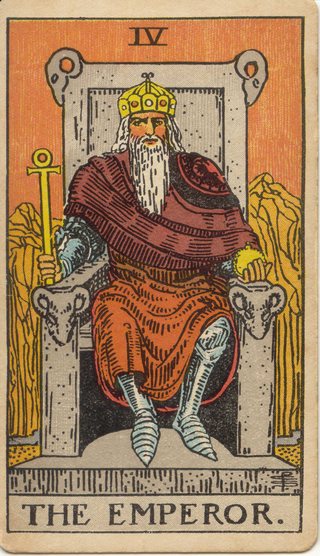 The Emperor
: The stone throne
He sits on a huge, plain grey throne cut from stone, its back square and heavy. Stone means permanence and law: what is built to last and is hard to move. Waite notes that he is sometimes shown seated on a cubic stone instead.
-
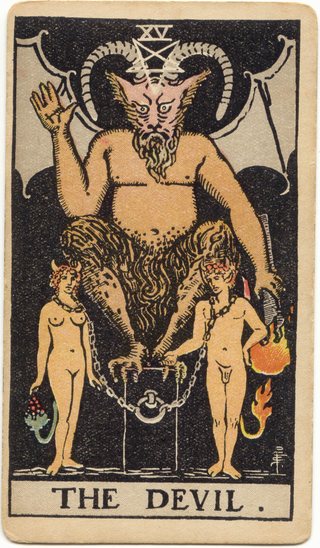 The Devil
: The black block
The Devil perches on a black half-cube with a white outline, gripping it with bird claws. Waite calls it an altar. A cube is often read as the material world, and here it is only half a cube: matter incomplete.
-
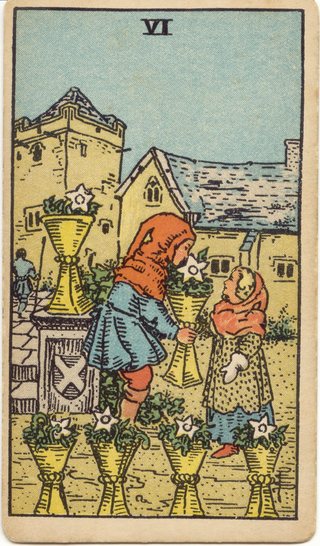 Six of Cups
: The stone pedestal and shield
On the left one cup stands on a stone block carved with a shield bearing a diagonal cross. It gives the scene a sense of something inherited and established: family, place and tradition.
-
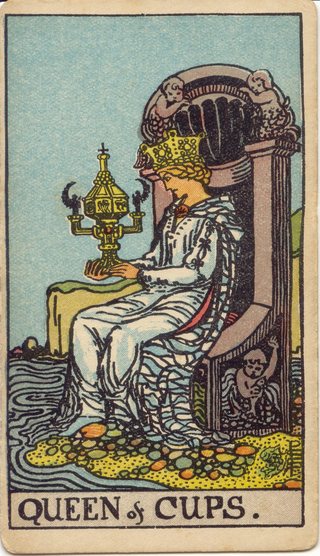 Queen of Cups
: The pebbles
Her feet rest on a strip of coloured pebbles in orange, green and grey. They are small, solid things at the water's edge: a reminder of the ordinary ground the Queen stands on.
-
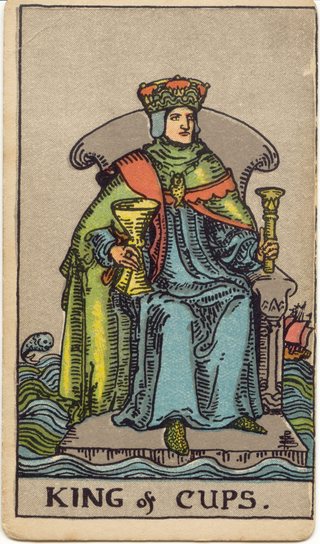 King of Cups
: The throne on the sea
His stone throne rests on a square block surrounded by waves. Waite notes that 'his throne is set upon the sea'. It is emotional stability: sitting calmly in the middle of turbulent feelings without being swept away.
-
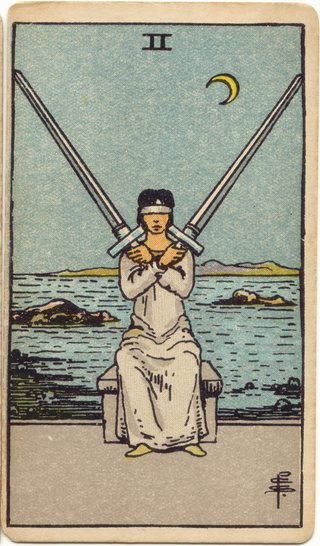 Two of Swords
: The stone bench
She sits on a low, square grey seat on a bare grey platform. Stone suggests firmness and patience, but also something cold and unmoving, a deliberate stillness set apart from the life of the scene behind.
-
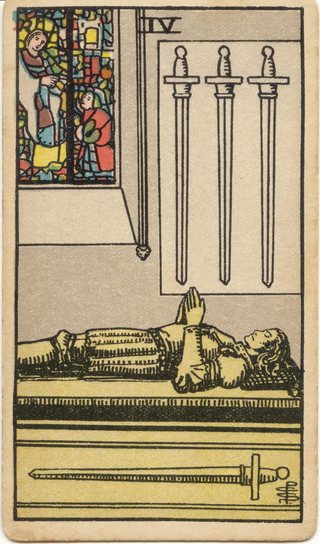 Four of Swords
: The tomb
A long yellow stone chest, its lid ridged with mouldings, supports the effigy. A tomb is the strongest possible image of withdrawal, and the card borrows its quiet rather than its finality.