
Armour in tarot
Armour is protection, readiness for conflict and, in medieval imagery, the knightly virtues. Saint Paul speaks of the armour of God as faith and righteousness. The Emperor wears armour beneath his robe, a ruler ready to defend his order. The Chariot driver is armoured, Death rides in black plate, and the knights of the minor suits carry their armour in different styles. In readings armour means defence, discipline and resolve, and can also mean being closed off. Ask whether it protects something worth guarding or keeps everything out.
Cards that show armour
-
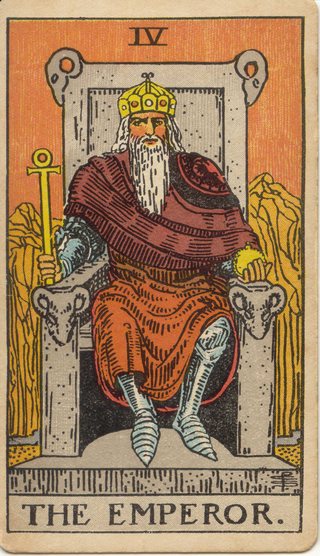 The Emperor
: The armour
Steel armour shows at his forearms and covers his legs and feet beneath the red robe. He rules from a throne but has not taken it off: readiness to defend what he has built, and perhaps a reluctance to be vulnerable.
-
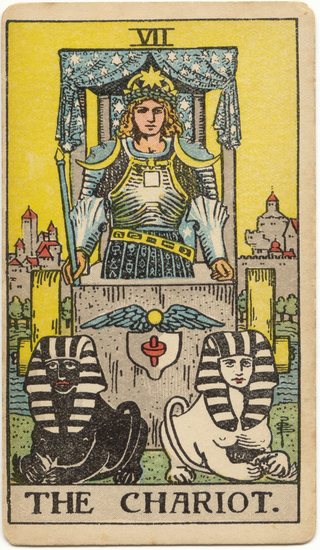 The Chariot
: The crescent moons
Two crescent moons sit on his shoulders as part of the armour. Waite says they are supposed to be the Urim and Thummim, the oracular objects worn by the Hebrew high priest. They hint at intuition carried inside the armour of action.
-
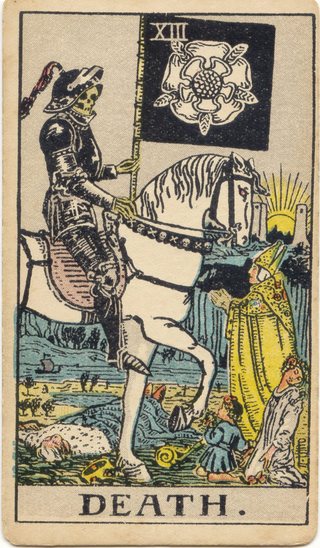 Death
Death: The armoured skeleton
Death is a skeleton in black plate armour with a red-plumed helmet, holding the reins and banner but no scythe or weapon. Armour makes him impersonal and unstoppable; Waite noted that he 'carries no visible weapon', so he does not need to strike.
-
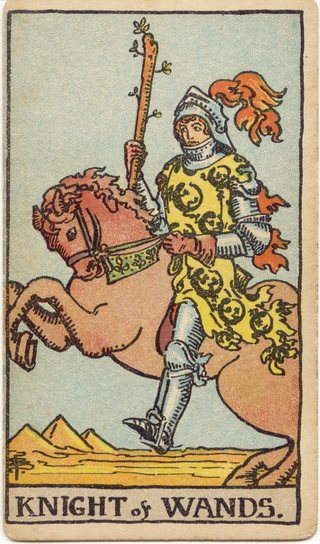 Knight of Wands
: The armour
Plate armour covers his arms and legs and a close helmet frames his face. He is equipped for danger and for distance, ready to ride into the unknown.
-
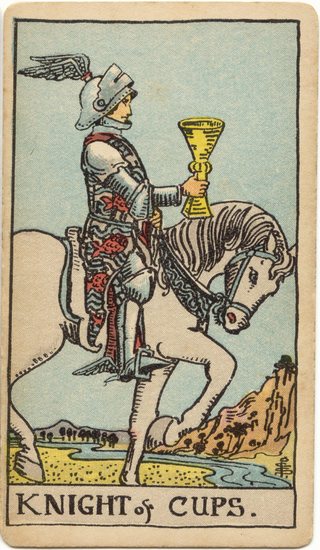 Knight of Cups
: The winged helmet and heels
Small grey wings rise from his helmet and from his heels. They recall Hermes, the messenger, and Waite reads them as 'those higher graces of the imagination': a mind that travels faster than the horse.
-
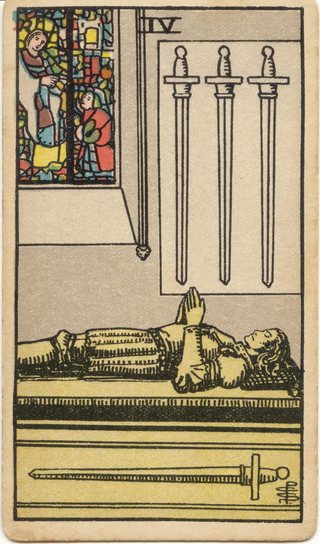 Four of Swords
: The knight's effigy
A knight in yellow armour lies on his back on the tomb, eyes closed, hands joined in prayer. Waite called it 'the effigy of a knight'. It is a figure at rest rather than a body: vigilance and devotion held in perfect stillness.
-
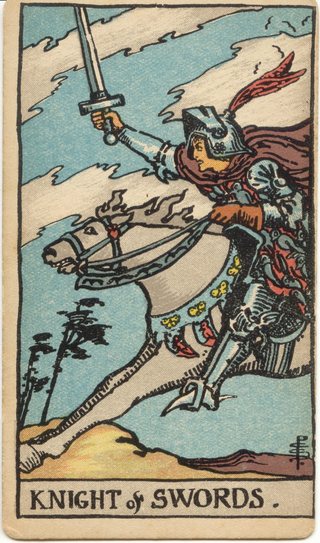 Knight of Swords
: The armour and red cloak
He is completely armoured, with a helmet, a red plume and a long dark red cloak flying back. The armour shows readiness for conflict; the red shows passion and urgency beneath the cool steel of the suit.
-
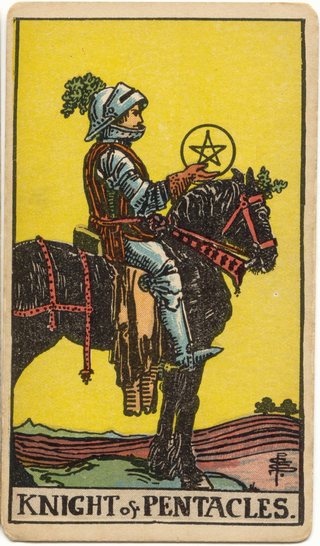 Knight of Pentacles
: The armoured knight
The rider wears full plate armour with a dark red tabard over it. His body is upright and steady, a picture of someone prepared, protected and in no hurry.
-
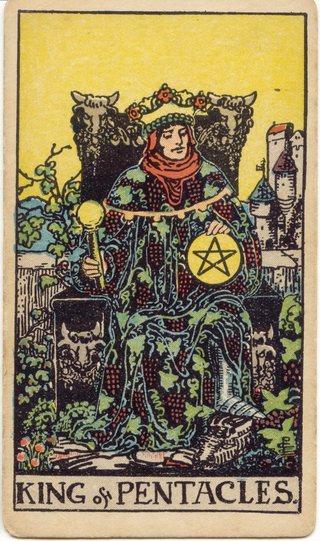 King of Pentacles
: The armoured foot
Beneath the hem of his robe, an armoured foot rests on a carved stone block. It is a reminder that his peace and prosperity were won by effort, and that he can still defend them.