
Crowns in tarot
A crown is authority made visible, and the kind of crown tells you the kind of rule. The Empress wears twelve stars, recalling the woman crowned with stars in the Book of Revelation; the Emperor a heavy jewelled crown of gold; the Hierophant a triple papal tiara. A crown sits on the tip of the Ace of Swords, wreathed with leaves, and another tumbles off the Tower. A king's crown lies in the dust beneath Death's horse. In readings crowns stand for mastery, sovereignty or achievement, and a fallen crown for a ruling idea or position that has been lost.
Cards that show crowns
-
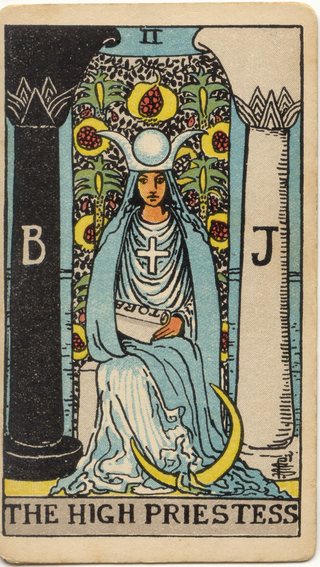 The High Priestess
: The horned crown
Her crown is a white full moon held between two curved horns. It recalls the headdress of the Egyptian goddess Isis, and many readers see in it the moon waxing, full and waning: the whole cycle at once.
-
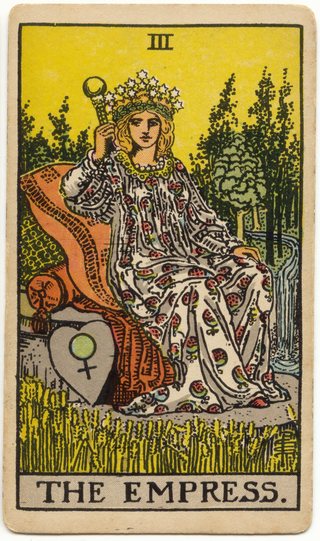 The Empress
: The crown of stars
Her crown is a cluster of small white stars set on a band of green leaves. Waite counts twelve, and readers link them to the months of the year or the signs of the zodiac: she presides over the whole turning year.
-
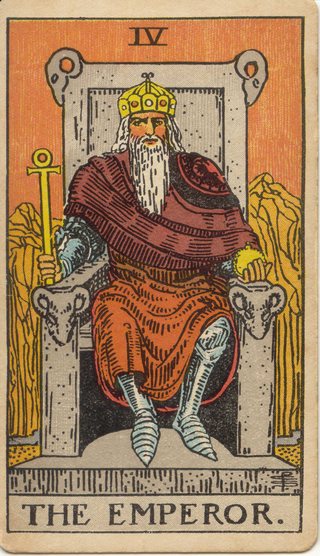 The Emperor
: The crown, robe and beard
A gold crown set with jewels, a deep red robe and a darker cape mark him as sovereign. Red is energy and will. His long white beard gives him age and experience: this is authority earned over time, not inherited yesterday.
-
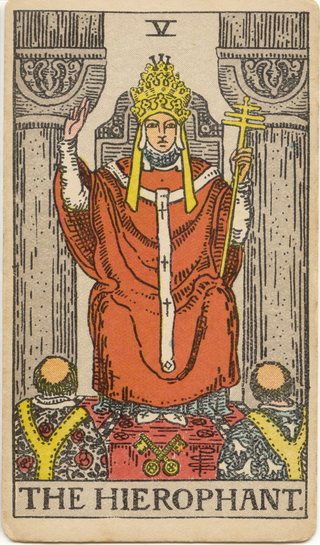 The Hierophant
: The triple crown
His tall gold crown rises in three tiers, like a papal tiara. The tiers are often read as three worlds or levels of being, and the crown marks him as the highest authority of an organised faith.
-
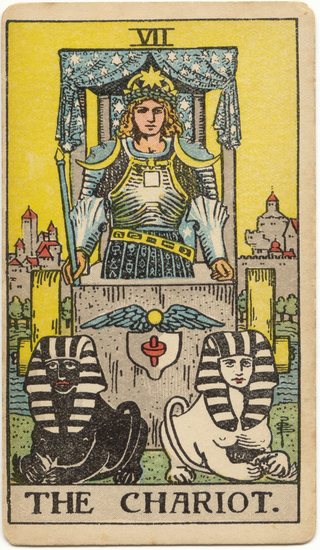 The Chariot
: The star crown
His crown carries a gold eight-pointed star above a green band of leaves. The star marks aspiration and guidance from above; the green band suggests a victor's wreath.
-
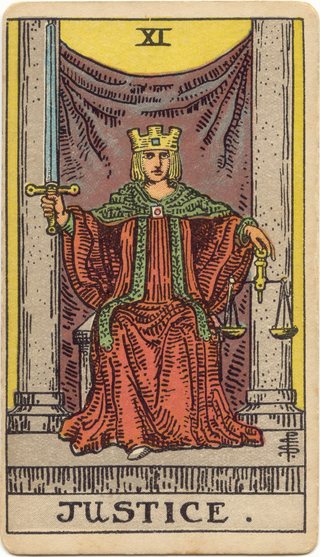 Justice
: The crown
A square, battlemented gold crown with a small square jewel at its centre. It gives Justice the authority of a ruler, but a plain, almost architectural one. The square shape is often read as order and the four-square stability of law.
-
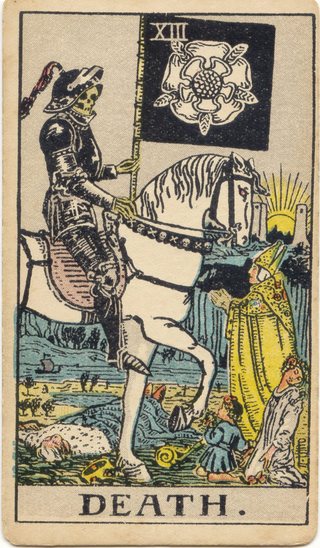 Death
Death: The fallen king
A king lies on his back in the lower left, his crown on the ground beside him. Rank and power make no difference here: the first figure in the procession to fall is the one who seemed to have the most.
-
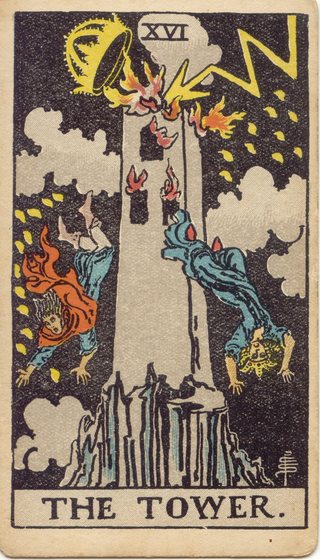 The Tower
: The falling crown
The golden crown that capped the tower is knocked off and tumbles sideways. A crown is authority and certainty; losing it here suggests that the idea which ruled the whole structure is the first thing to go.
-
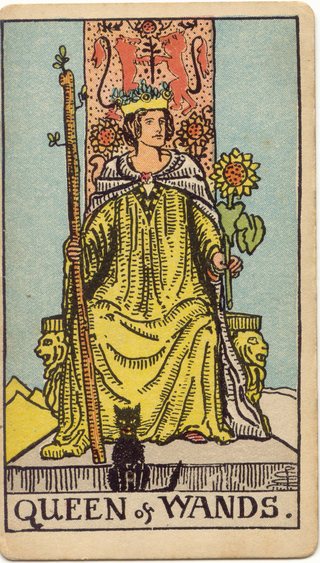 Queen of Wands
: The crown
Her gold crown is set with green leaves or blossoms, more garland than metalwork. It suits a queen whose authority feels lively and natural rather than ceremonial.
-
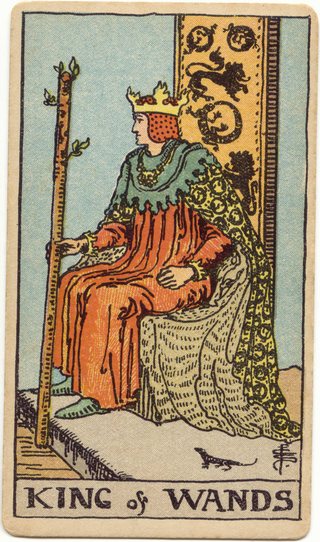 King of Wands
: The crown and red cap
His gold crown has flame-like points and sits over a red cap. Waite calls this a cap of maintenance, worn beneath the crown by all four Kings: a mark of dignity and office.
-
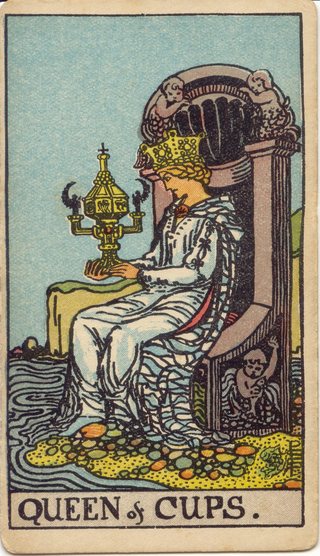 Queen of Cups
: The crown
She wears a gold crown studded with round shapes, over braided fair hair. It gives her authority, but her bowed head and inward gaze suggest that her rule is quiet and personal.
-
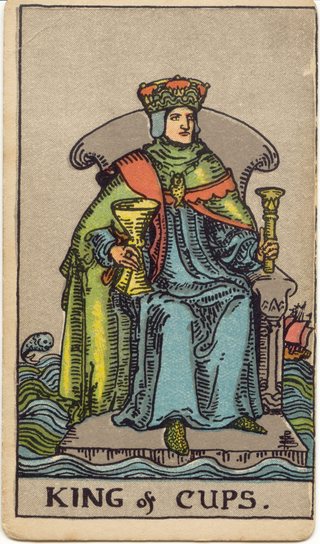 King of Cups
: The crown
His crown sits over a pale close-fitting cap. It confirms his authority, though his expression is watchful rather than commanding, the face of someone who listens before he speaks.
-
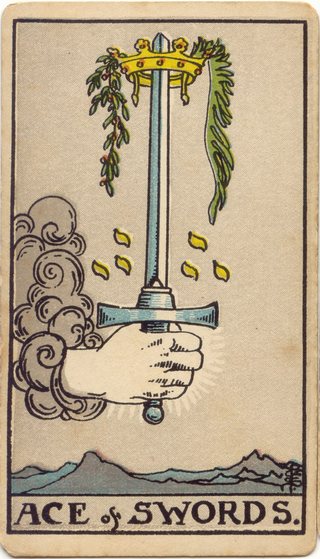 Ace of Swords
: The crown on the point
A gold crown set with red stones rings the very tip of the blade. Readers take it as mastery or victory won by the mind, and Waite hinted that it might signify something higher than worldly success, without saying what.
-
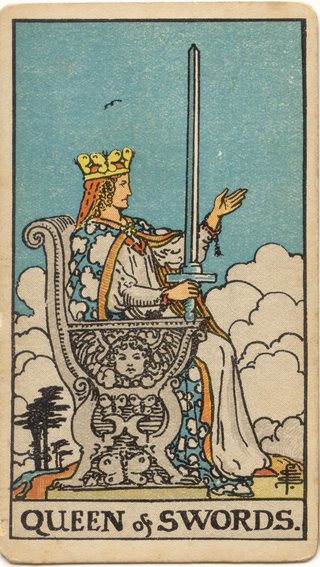 Queen of Swords
: The butterfly crown
Her gold crown appears to be made of butterfly shapes, though the scan is not perfectly clear. Butterflies are creatures of air, the suit's element, and long-standing images of the soul and of transformation.
-
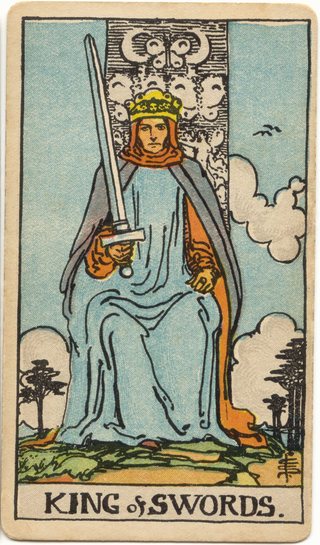 King of Swords
: The crown and hood
He wears a gold crown over an orange hood that frames his face. The crown marks his authority; the close hood gives him the look of a judge or scholar rather than a warrior.
-
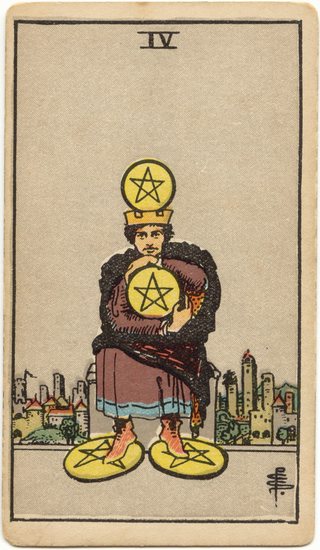 Four of Pentacles
: The coin on the crown
A pentacle balances on top of his small gold crown. It suggests that money or security has become part of his identity and his thinking: the coin sits where his mind is.
-
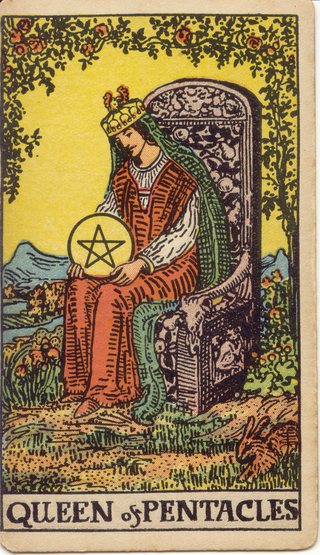 Queen of Pentacles
: The crown
A gold crown with a small red ornament sits on her veiled head. She is a ruler, but a domestic one: her domain is the garden and the household around her.
-
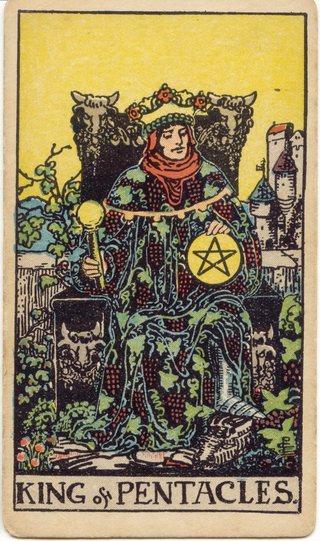 King of Pentacles
: The flower wreath
Instead of a heavy crown he wears a wreath with red flowers over a red hood. It suggests a ruler whose power is linked to growth and the land rather than to conquest.