
Water, rivers and pools in tarot
Water is the element of the suit of Cups and, in nearly every tradition, of feeling, cleansing and the unconscious. It is also the water of baptism and of the rivers of paradise. Smith uses it constantly: the Empress's waterfall, the pool into which the Star pours, the pond from which the Moon's crayfish crawls, the stream where Temperance stands with one foot in it, the river behind Death, the sea of the King of Cups. In readings, notice the state of the water: still or rough, flowing or stagnant, crossed by boat or waded through. That usually tells you about the emotional weather of the card.
Cards that show water, rivers and pools
-
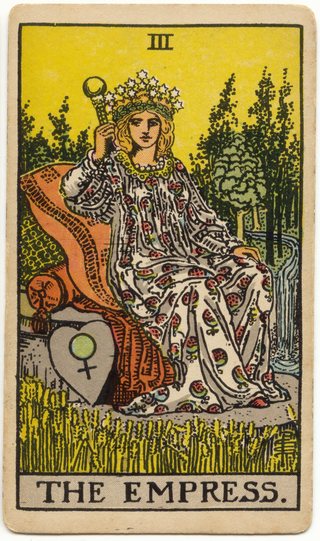 The Empress
: The trees and waterfall
Dark, tall trees stand behind her, and on the right a stream pours down over rocks. Water feeding a green landscape suggests feeling and life flowing freely, the source that keeps her garden alive.
-
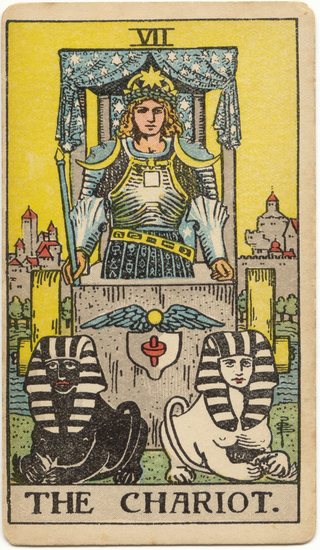 The Chariot
: The town and river
Behind him, beyond a strip of river, stand the walls, towers and red roofs of a town. He has left settled life behind and crossed water: the chariot is heading out into the world.
-
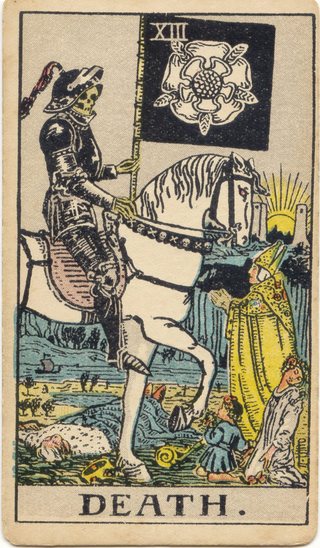 Death
Death: The river and boat
A blue river crosses the landscape with a small boat on it. Rivers have long stood for passage between states, and ancient myth often places a boat at the crossing to the next world.
-
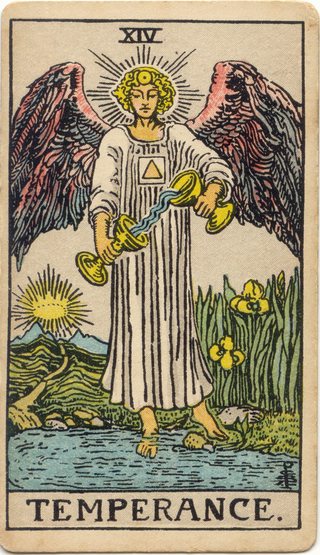 Temperance
: The two cups and flowing water
Water passes from a higher gold cup to a lower one in a long sideways slant, more like a current than a pour. Many readers take it as a hint that this is not ordinary water: Waite called it 'the essences of life'. It is the card's central act of blending.
-
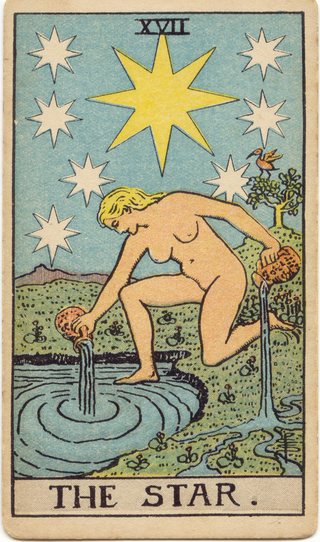 The Star
: The two jugs
She pours from two round earthenware jugs at once. One empties into the pool, the other onto the grass, where the water runs away in small streams. The gift goes both to the inner world of feeling and to the practical ground of life.
-
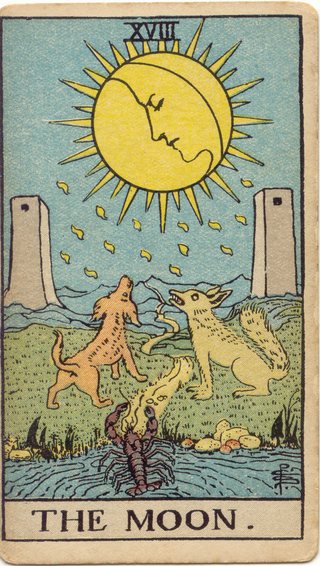 The Moon
: The pool
The foreground is a band of blue water, with a few pebbles and dark plants along its edge. Water is the traditional image of the unconscious. The whole scene begins here, at the shore of what is not yet understood.
-
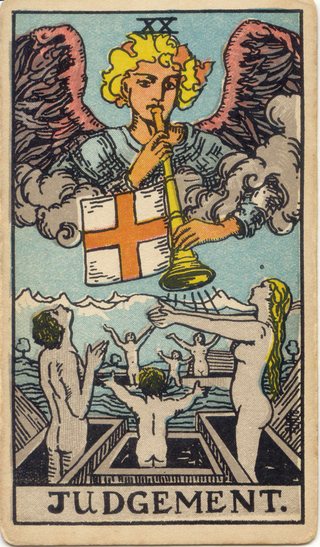 Judgement
: The floating coffins
Rectangular open coffins float on the water rather than lying in the ground. Their lids are gone. A coffin is the fixed shape of a finished life; rising out of it means leaving behind an old self that had become a container.
-
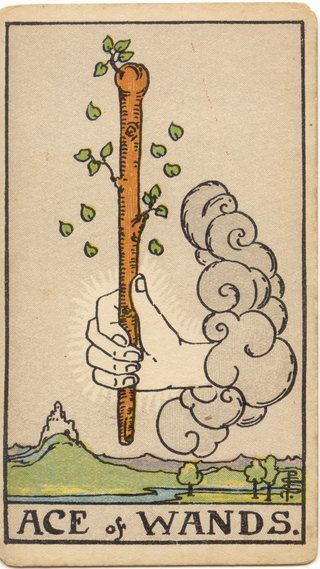 Ace of Wands
: The river and trees
A blue river winds across the valley floor, with a few round trees on the far side. Water and growing things in the background soften the card: the fire of this suit is fertile, not destructive.
-
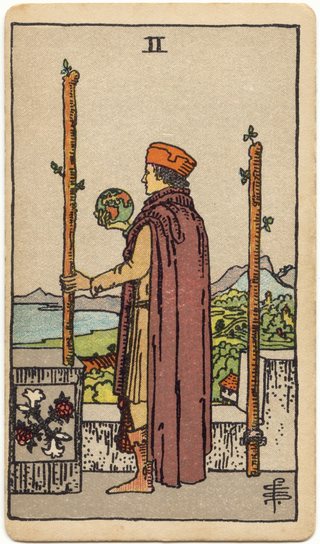 Two of Wands
: The landscape below
Water, fields, a red-roofed house and blue-grey mountains stretch away on either side. The land is fertile and peaceful. The question is not whether the world is worth reaching but whether he will go.
-
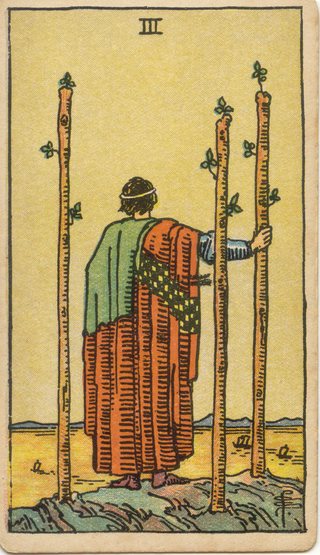 Three of Wands
: The ships
Small sailing ships dot the golden water. Waite called them his ships, bearing his merchandise. They stand for ventures already launched: things that have left your hands and may come back in their own time.
-
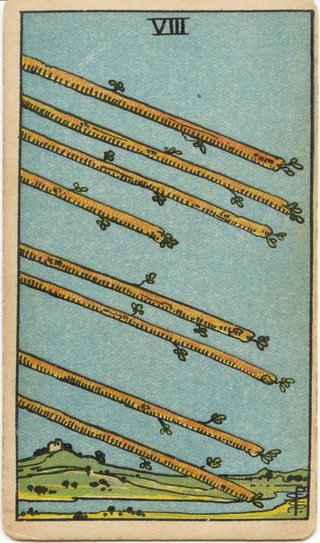 Eight of Wands
: The river
A river runs across the bottom of the card, below the green fields. Moving water mirrors the flight above: everything in this landscape is on its way somewhere.
-
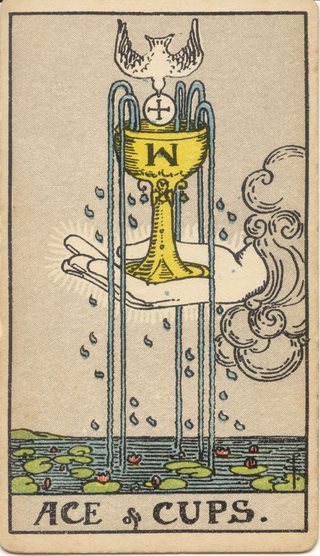 Ace of Cups
: The five streams
Waite's text speaks of four streams, but Smith drew five arching from the cup. Readers often link the five to the senses, or to the four elements with a fifth, spirit. The mismatch is a reminder that artist and author did not always agree.
-
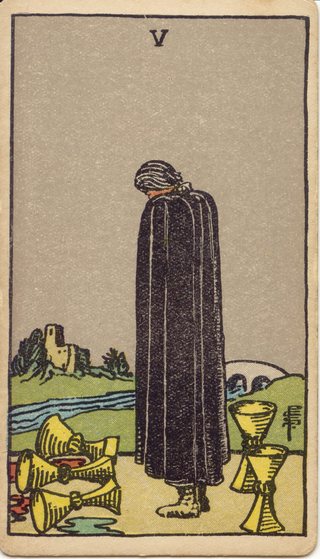 Five of Cups
: The river
A blue river runs across the middle of the picture, between the figure and the far bank. Water is the element of Cups, and here it marks the flow of feeling and a separation that must be crossed.
-
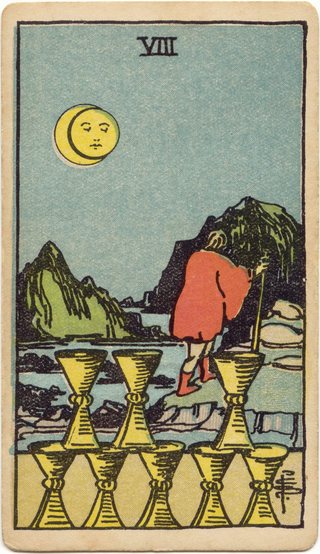 Eight of Cups
: The water and rocks
Between the cups and the mountains runs a band of water broken by rocks and pools. He has to cross it: the emotional threshold between the life left behind and the one being sought.
-
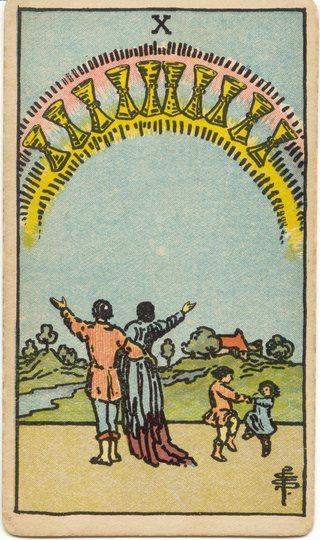 Ten of Cups
: The river
A blue river winds through the green fields behind the family. In the suit of Cups, flowing water is feeling that moves freely, and it ties the landscape together.
-
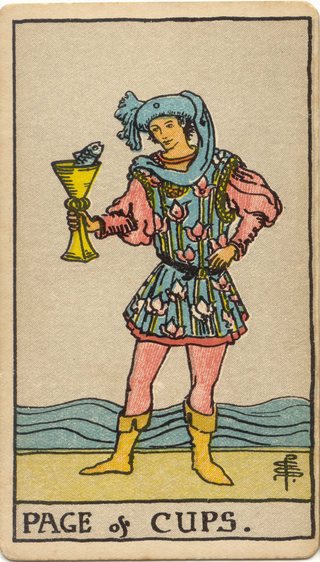 Page of Cups
: The sea behind him
Low blue waves roll behind him across the width of the card, with a sandy shore under his feet. The sea is the emotional and imaginative depths from which the fish has come.
-
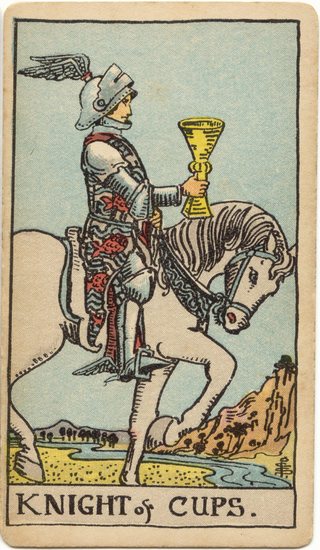 Knight of Cups
: The stream and rocky slope
A narrow blue stream winds across sandy yellow ground, and a brown rocky slope with small trees rises on the right. Water must be crossed and ground climbed: feeling has to meet the real terrain of life.
-
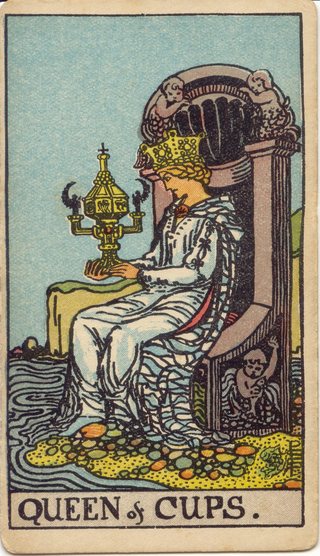 Queen of Cups
: The throne at the water's edge
Her heavy carved throne stands right at the shoreline, with the sea flowing up to her feet. She lives where solid ground meets emotional depth, belonging to both.
-
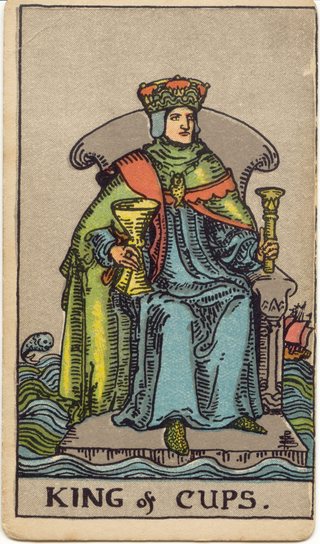 King of Cups
: The throne on the sea
His stone throne rests on a square block surrounded by waves. Waite notes that 'his throne is set upon the sea'. It is emotional stability: sitting calmly in the middle of turbulent feelings without being swept away.
-
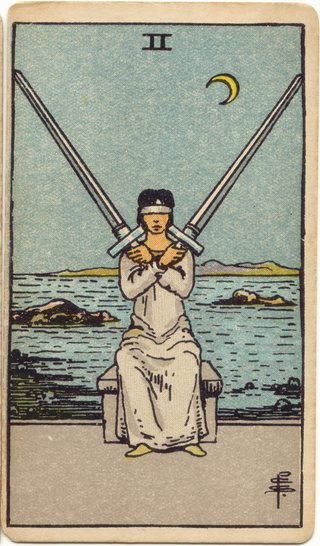 Two of Swords
: The sea and rocks
Calm water stretches behind her, broken by low dark rocks. Water belongs to feeling, and she has turned her back on it. The rocks hint at obstacles just under a smooth surface, the things that make a quiet sea hard to cross.
-
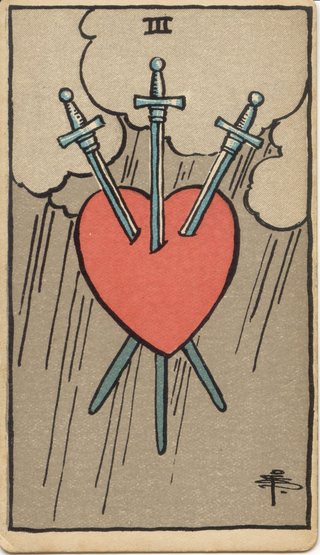 Three of Swords
: The rain
Long diagonal streaks of rain fall across the whole scene. Rain is the obvious picture of tears, but it is also what washes and eventually clears the air, which is why many readers see the card as grief that leads somewhere.
-
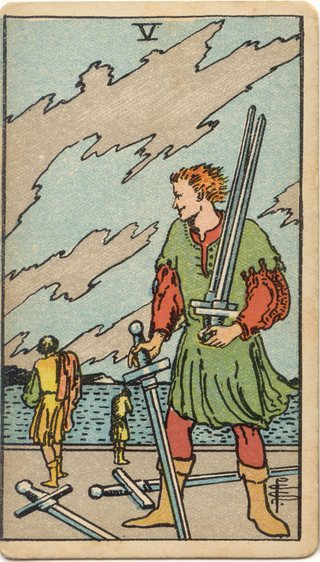 Five of Swords
: The water and far shore
Behind the figures a band of grey-blue water meets a dark low shore. The losers are heading towards it, and water often marks a boundary to cross or a place where feeling takes over from argument.
-
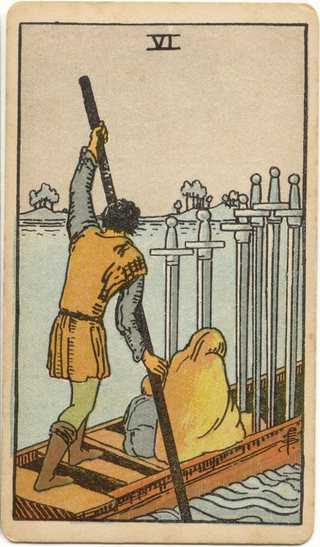 Six of Swords
: Rough water and smooth water
On the right, near the viewer, the water is drawn in curling ripples; further out it lies flat and calm. Many readers take the contrast as the card's message: the troubled stretch is behind, the quieter one ahead.
-
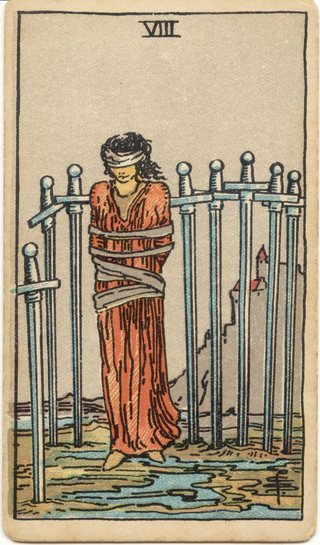 Eight of Swords
: The marshy ground
Shallow pools of water lie on the ground at her feet. Water suggests emotion, and here it is shallow and underfoot: feelings that make the ground unsteady without being deep enough to drown in.
-
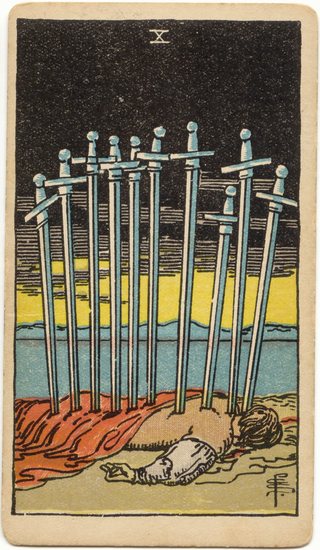 Ten of Swords
: The calm water and hills
Behind him lies flat blue water and a line of grey-blue hills. The landscape is perfectly still. After the storms of earlier swords cards, the wind has dropped and the scene is quiet.
-
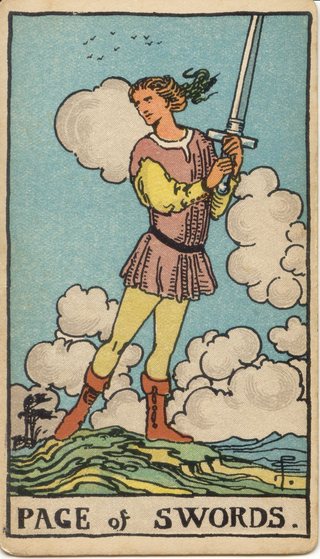 Page of Swords
: The rough high ground
He stands on an uneven green rise above a distant landscape of blue hills and water. High ground gives a good view and an advantage, but the footing here is rough, much like the page's position: alert, but not yet secure.
-
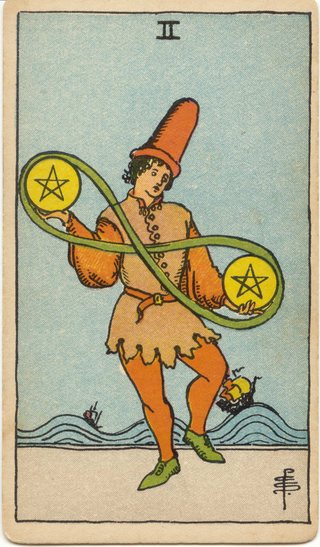 Two of Pentacles
: The heaving sea
Behind him, the sea rises in high rounded waves well above the horizon line. It shows the instability of his circumstances: the ground of his life is moving even while he dances.